
 | ||||||
Christians






“The Jesus Christ story was plagiarized from Horus, Dionysius and Mithras.”
Christians Copied Pagan Ceremonies
During the years between 337 and 352 AD Pope Julius One decided to celebrate Christ's mass during the Winter Solstice (a Pagan ritual).
The winter Solstice was celebrated by Pagans in Scandinavia by burning a Yule log. The fire represented the light of the Sun on the darkest day of the year.
Pope Julius changed the light of the Sun to the light of God's son (Jesus).
The Pagan Yule log marked the Sun’s rebirth.
Pope Julius set the birth of Jesus on December 25th.
Celebrating the Pagan Yule means no work as long as the special log burns (10 to 14 days).
The Catholics changed that to the Twelve Days of Christmas.
Yule requires gathering family, friends and neighbors for songs, stories, dances, romances, feasts and fun.
And that's how Christmas began.
Easter
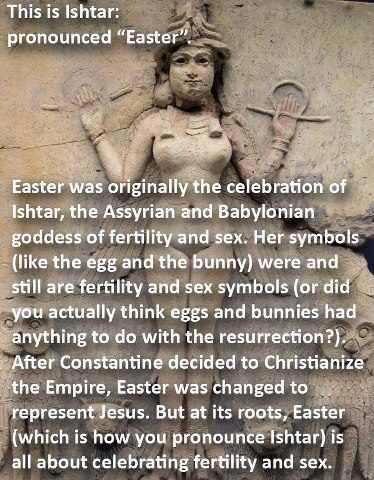
Easter is another Pagan ceremony that Christians adopted as their own.
Ishtar (pronounced Easter) existed long before Christianity as a festival of spring and fertility. It is the day of the first full moon after the vernal equinox. The hare (now the rabbit) and the egg appeared as symbols of fertility in the original celebrations and continue today despite their Pagan heritage.
You might find it strange that we celebrate Christ's resurrection with rabbits and eggs. Because new life emerges from eggs, they have long been a symbol of the rebirth of nature in spring after its winter-long death. The Persians, Greeks, and Romans interwove this symbol into their spring-time celebrations.
The deity Jesus was plagiarized from Greek mythology that Christians accept as their savior then become dependant on this external delusion.
Political men wrote the bible
striped woman of their power and
created fear and control over their subjects.
The bible's middlemen motivation was to get people to obey and finance their tax-free churches.
Human beings lived in Damascus over 11,000 years ago. It took the Christian Deity (God) over 9,000 years to claim a son (Jesus). Christians decided those 9,000 years didn't count and restarted the calendar at 0. The millennium is not 2000.
Hypothetical God told some man that anyone who doesn't accept Jesus, as their savior will go to Hell and eternal damnation. According to that everyone living in countries that never heard of Jesus including Jewish, Hindu, Muslims and Buddhists are going to Hell. But remember God loves you. Sorry about that billions of people.
There are roughly 4.80 billion Non-Christians.
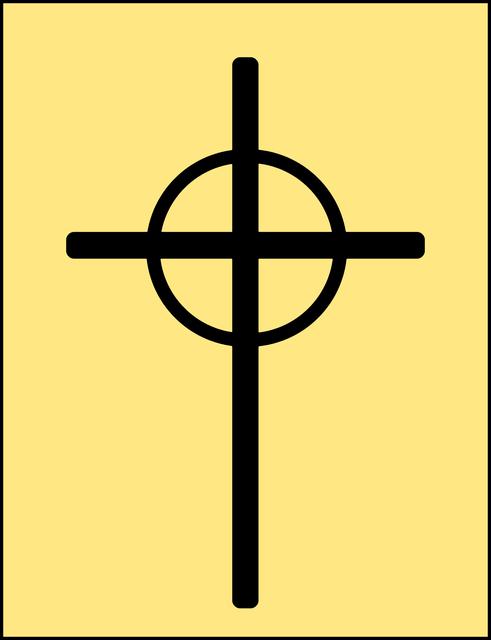
The cross is a Pagan symbol representing the balance of nature such as East, West, North and South. The circle in the center represents the Sun (not the son Jesus).
The cross didn’t become an identifying Christian symbol until the 4th or 5th century and then referred to as the Christian Crucifixion cross.
The Cross
The Christmas Tree
The first records of the fir or pine tree's association with Christianity occurred in Germany during 600 AD. A Christian priest used the triangular shape of this tree to describe the Christianity of Father, Son and Holy Ghost to his children.
The converted Christians then regarded this tree as a symbol of their new faith.
The first decorated tree occurred in the year 1510 at Riga, Latvia.
